中国精密工具公司
翻译
English中文(简体)FrançaisРусскийEspañol

热塑性塑料

» Thermoplastics

材料 / Engineering plastics

Engineering plastics for CNC machining

From sliding components to transparent covers, match the material to the job. Compare common thermoplastics, then define the grade and requirements for your part.

GPT Precision machines commonly specified engineering plastics, including POM, nylon, polycarbonate, ABS, PTFE and PMMA. Specific grades and suitability are reviewed for each project.

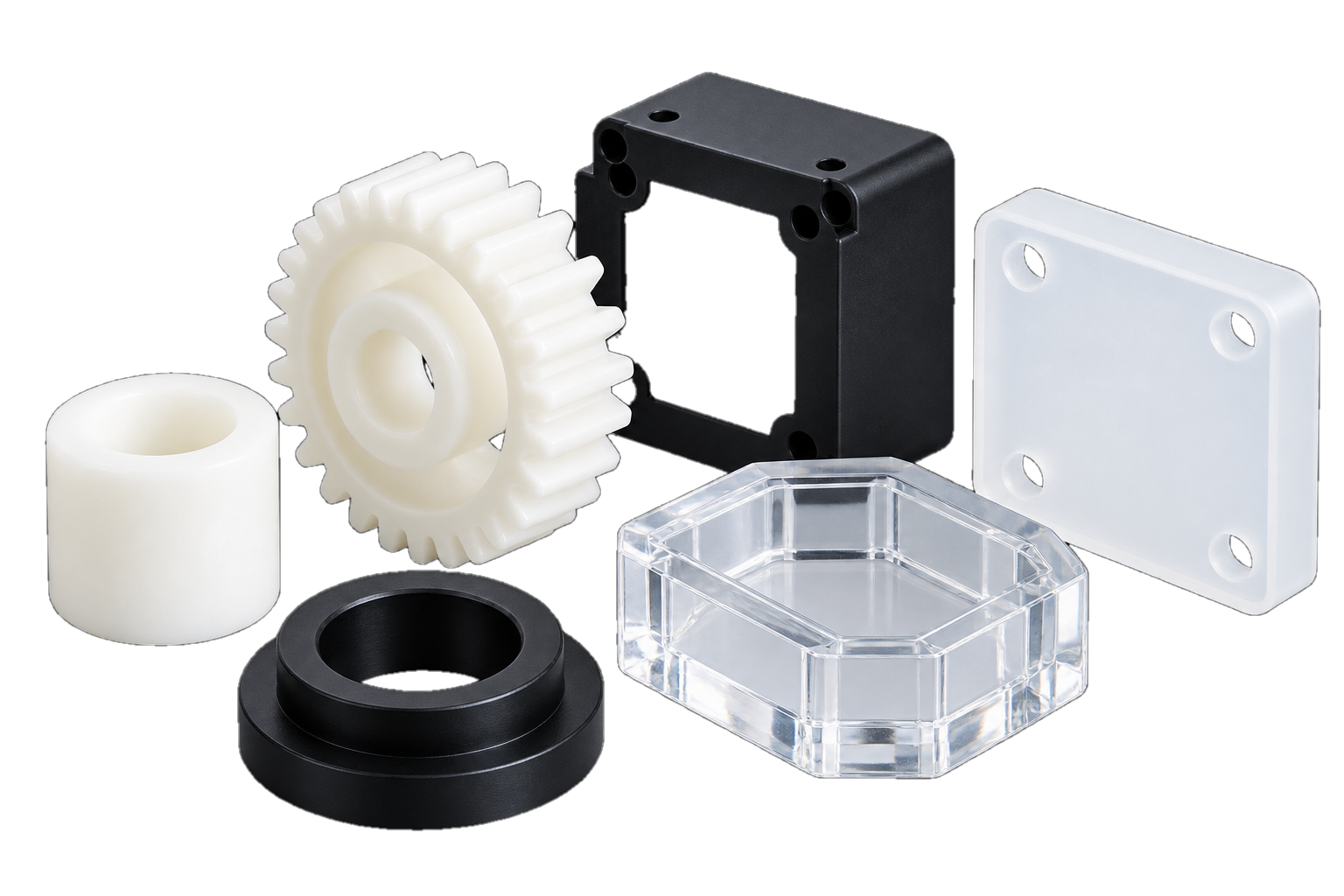
Illustrative plastic components including a gear, bushings and clear plates
Material illustration · Production photo to follow.

Material reference

Explore Common Machinable Thermoplastics

Compare each family’s typical strengths, application examples and selection limits. These are starting points for review; final suitability depends on the grade and service conditions.

POM / Acetal

A useful starting point for mechanical parts that need stiffness, low moisture uptake and good sliding behavior.

Common applications

Gears, bushings and precision guides.

Selection notes

Specify the acetal grade, loading and mating clearances. Review temperature and chemical exposure before approving the material.

PA / 尼龙

Toughness and wear resistance make nylon a candidate for moving and load-bearing components.

Common applications

Rollers, bushings and wear guides.

Selection notes

Moisture absorption can affect dimensions. Confirm the nylon grade, material condition and humidity expected during inspection and service.

PC / 聚碳酸酯

Offers impact resistance and transparent grade options for parts that combine visibility with mechanical function.

Common applications

Equipment covers and viewing components.

Selection notes

Review chemical compatibility and stress-cracking risks. Specify the required clarity and finish of machined faces; protective performance needs application-specific validation.

ABS

Combines toughness, stiffness and good machinability for general-purpose development and enclosure parts.

Common applications

Housings, covers and fit-check prototypes.

Selection notes

Define color, visible surfaces and assembly details. Confirm temperature and outdoor exposure requirements against the chosen grade.

PTFE

Low friction and broad chemical resistance make PTFE a candidate for sliding and chemically exposed components.

Common applications

Seals, valve seats and sliding elements.

Selection notes

Review loading and creep, especially where fit must be maintained over time. Specify virgin or filled material and the governing grade requirements.

PMMA / 有机玻璃

Known for clarity, acrylic is useful where the finished part’s visual appearance is a primary requirement.

Common applications

Viewing windows, display parts and clear models.

Selection notes

Review impact, mounting stresses and edge details. Specify acceptable tool marks and any polishing or optical finish required.

Material names identify families. Grade, filler, color, stock form and supporting documentation are confirmed for the individual project.

Application-led selection

What does your part need to do?

Start with the requirement that matters most. Use the guide below to frame the material discussion.

Movement & wear

Material candidatesPOM · Nylon · PTFE

Compare load, sliding speed, mating surface and lubrication. Check wear behavior and deformation for the exact grade.

Moisture & chemicals

Key checksFluid · Temperature · Exposure time

List fluids, concentration, humidity, temperature and exposure time. Include moisture-related dimensional changes in the review.

Clarity & 外观

Material candidatesPC · PMMA

Balance visibility with impact and chemical exposure. Define the required surface finish and visual acceptance criteria.

Dimensional stability

Key checksGrade · Geometry · Measurement conditions

Review thermal expansion, moisture, residual stress and loading. Agree on measurement conditions for critical fits.

Use this guide for initial screening. Check the selected grade’s technical data and validate it against the actual application.

From specification to finished part

Review Material and Part Requirements Together

Temperature, moisture, residual material stress and stresses introduced during machining can affect dimensional stability. Review critical fits against the grade, geometry and agreed measurement conditions.

Geometry & manufacturing route

Provide the current drawing and CAD model. Explain how the part fits, moves or interfaces with the rest of the assembly.

  • Mark critical holes, 螺纹, thin sections and mating features.
  • Identify prototype and production requirements separately.
  • State the order quantity and expected repeat demand.

Explore CNC milling ↗CNC车削 ↗

Inspection & acceptance

Define the features that control function and the criteria used to accept them. Agree on the inspection scope during quotation.

  • Identify datums, critical dimensions, temperature and material condition for measurement.
  • Specify appearance criteria for visible faces and edges.
  • List material records and inspection documents required.

Review our quality approach ↗

热塑性塑料: Common Questions

Which thermoplastics can you review for CNC machining?

Our confirmed material categories include POM/acetal, nylon, polycarbonate, ABS, PTFE and PMMA/acrylic. Provide the complete material specification so grade availability and suitability can be reviewed for your part.

Can I send a drawing without a final material grade?

是的. Include the operating environment, functional requirements and any candidate materials. Identify who will approve the final specification or any proposed substitution before production.

Will a machined prototype match a molded production part?

Machined and molded parts can differ in material condition, dimensional behavior and surface finish. Define what the prototype must demonstrate, and validate the molded production part separately.

How should I specify tolerances for plastic parts?

Mark the critical dimensions, 基准点, mating features and acceptance conditions on the drawing. Tolerances and inspection arrangements are reviewed against the material, 几何形状和预期用途.

订单中是否可以包含材料文件?

列出所需的证书, 在您的询价中提供材料识别和批次记录. 可用文件和商定的供应范围在报价或订单审核期间确认.

您的下一步

带上图纸. 添加工作条件.

发送以下信息以便我们审核材料适用性, 机加工要求和报价范围.

  • 图纸与CAD修订
  • 材料等级
  • 数量与预期用途
  • 关键要求