中国精密工具公司
翻译



三轴终极指南, 4-轴, 五轴数控加工
12 月 23, 2016
三轴终极指南, 4-轴, 五轴数控加工
在 GPT 精密, 我们的先进工厂配备有全套先进的三轴, 4-轴, 和五轴数控铣床中心. 对于设计工程师来说, 了解这些机器的具体能力对于优化零件设计, 控制成本, 以及确保可制造性至关重要.
提及的 "轴" describes the multi-directional movements a CNC machine can perform to remove material from a workpiece. A standard CNC machine operates along three primary linear planes:
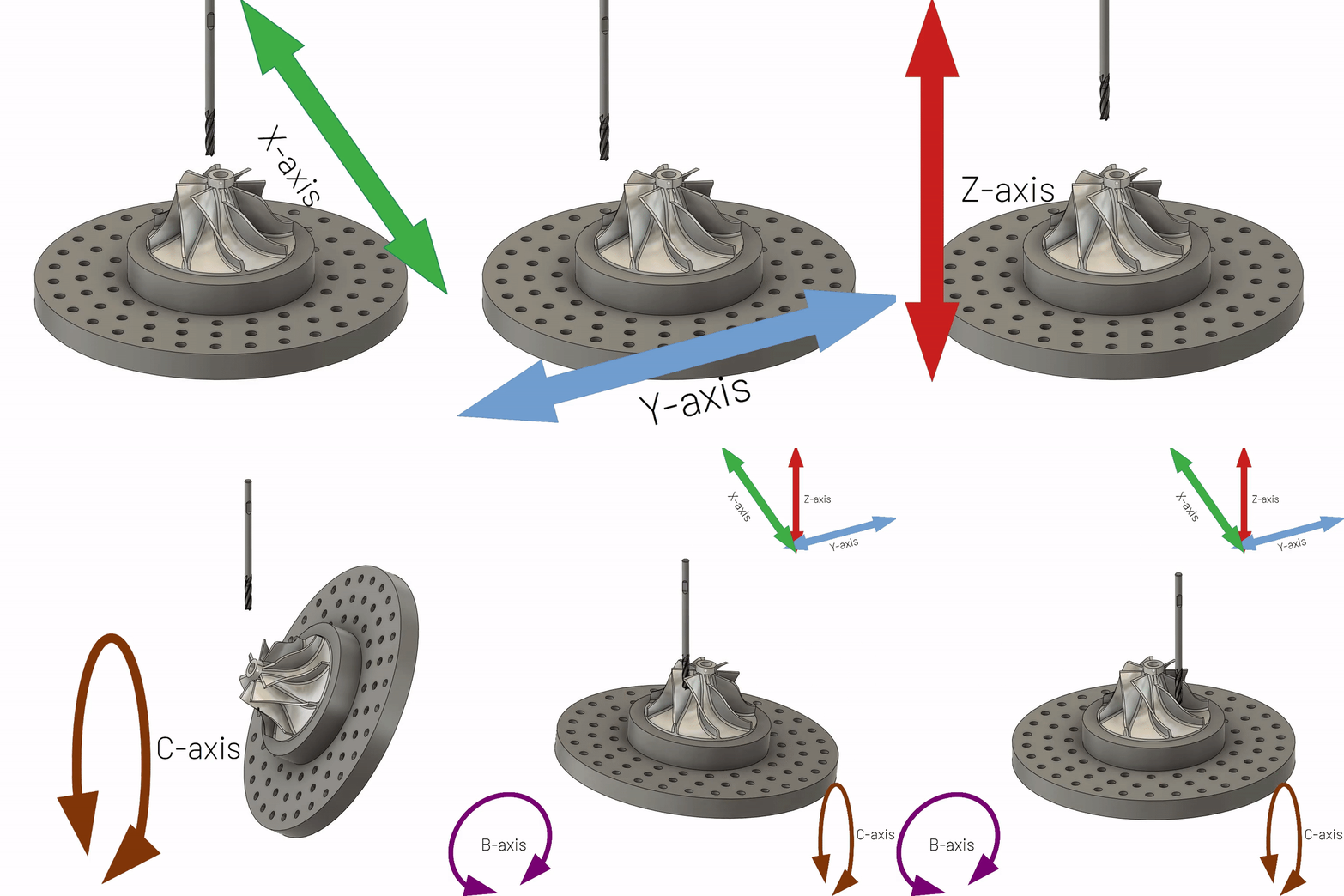
Coordinate Systems & Motion Trajectories
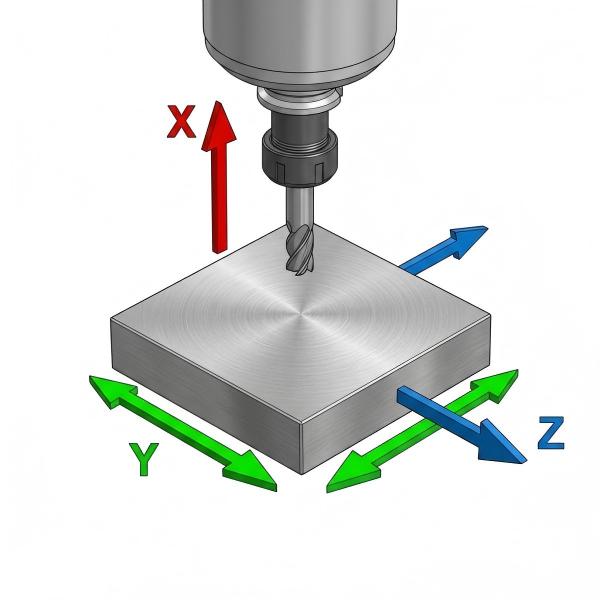
3-Axis Configuration
Linear motion exclusively across
X, Y, and Z 轴.
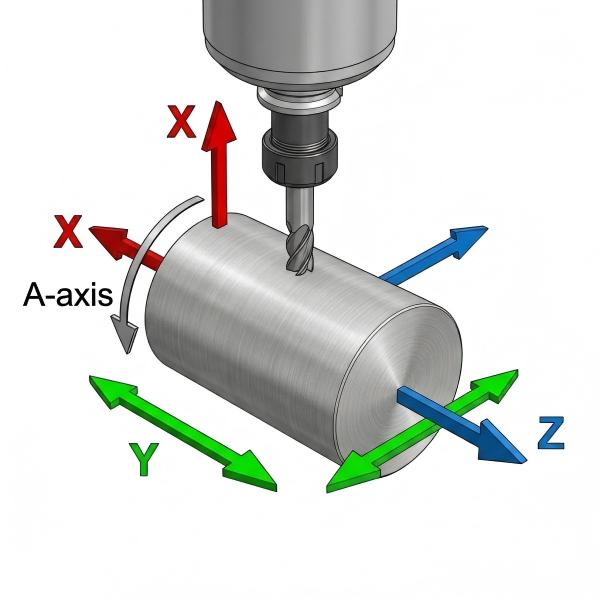
4-Axis Configuration
Adds rotation (A-Axis)
around the X-axis.
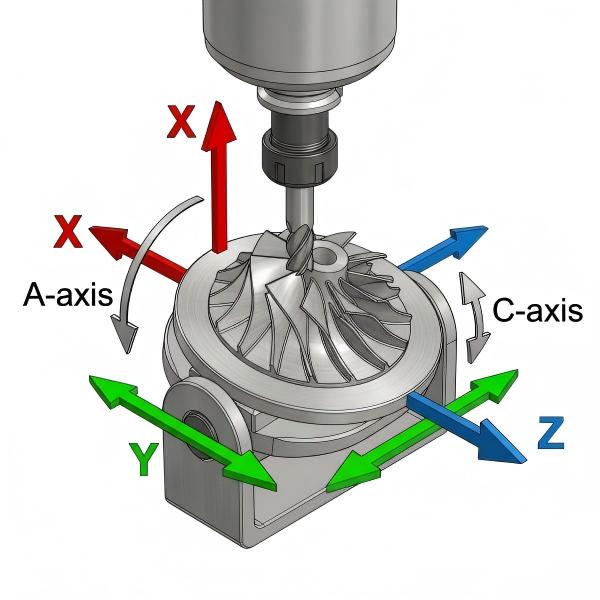
5-Axis Configuration
Adds two rotational axes
(例如, A & C).
3-Axis CNC Machining: The Foundation
In 3-axis machining, the workpiece remains stationary in a single fixture while the cutting tool moves along the X, Y, and Z axes. This process is highly efficient for manufacturing 2D and 2.5D geometries where features do not require multi-angle depth.
Best suited for:
- Automatic and interactive milling operations
- Milling standard slots and planar profiles
- Drilling and threading holes in-line with an axis
- Cutting sharp edges and basic mechanical components
While machining all six sides of a part is possible, it requires manual repositioning and multiple setups. Undercut features can occasionally be achieved using specialized tools like T-slot or dovetail cutters, but highly complex designs are usually more economically viable on 4 or 5-axis centers.
4-Axis CNC Machining: Adding Rotational Flexibility
To overcome the limitations of stationary setups, 4-axis machining introduces rotation. The spindle still moves along the X, Y, and Z axes, but the workpiece is mounted to a rotary axis (the A-axis), allowing it to rotate. This means four sides of a part can be machined in a single fixture setup, drastically speeding up production and reducing cumulative positioning errors.
There are two primary methods of 4-axis machining:
- Index 4-Axis: The A-axis rotates the part to a specific angle, a brake locks it in place, and the machine performs the cut. It does not cut while rotating.
- Continuous 4-Axis: The cutting tool removes material simultaneously as the A-axis rotates. This is essential for machining complex arcs, cam lobes, and helical profiles.
Design Tip:
4-axis machining allows angled features, but since there is only one rotational axis per setup, all angled features must relate to that same axis unless additional fixtures are utilized.
5-Axis CNC Machining: Mastering Complex Geometries
5-axis machines utilize two rotational axes alongside the standard three linear axes. Depending on the machine's architecture, this could be a combination of A and C axes, or B and C axes, driven by either the spindle head tilting or the trunnion table rotating.
There are two main configurations:
- 3+2 多轴加工 (Positional 5-Axis): The two rotational axes orient the workpiece to any compound angle, lock it in place, and the standard 3-axis toolpath executes the cut. While it doesn't rotate during cutting, it efficiently tackles highly complex 3D shapes from almost any angle.
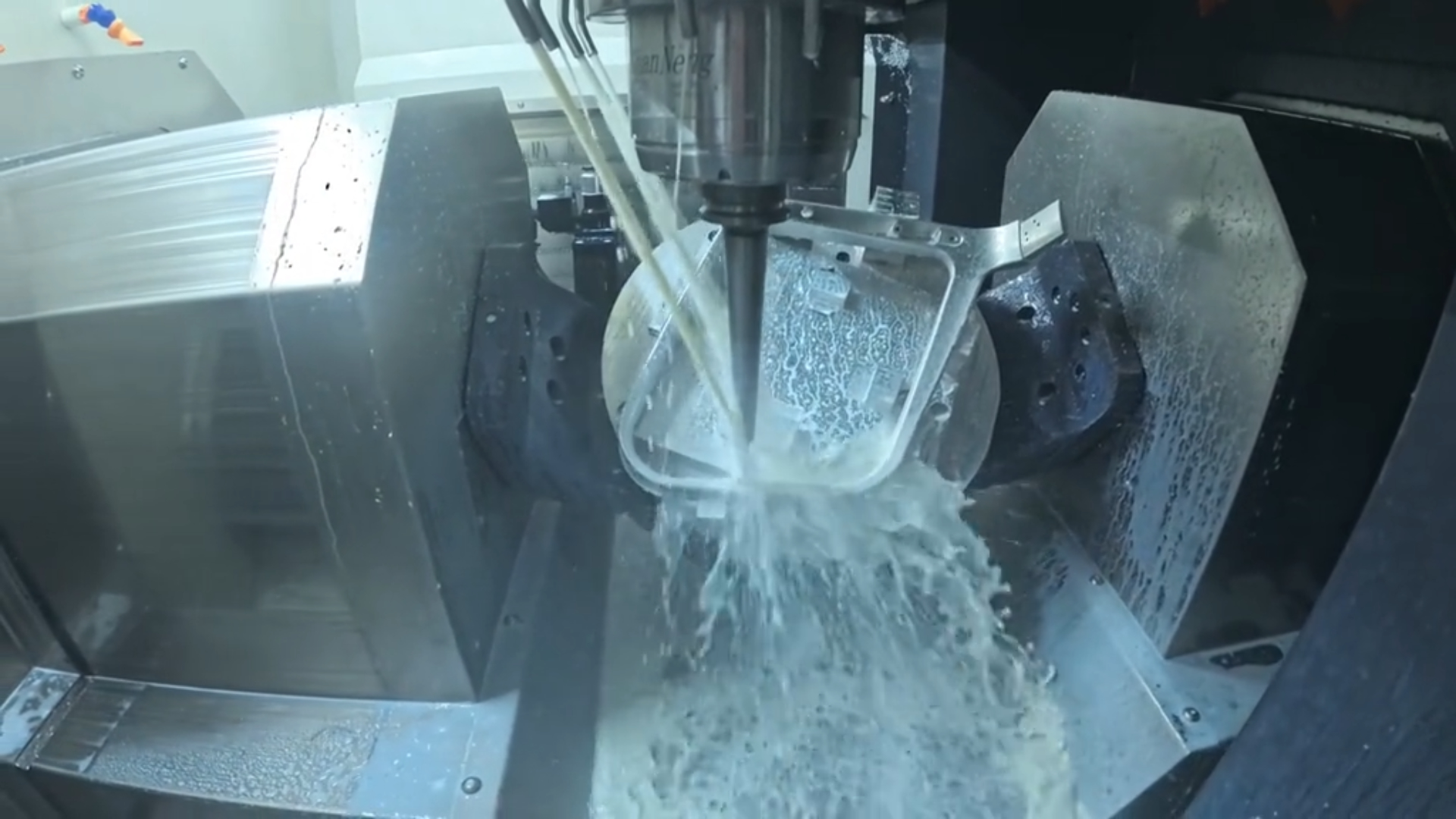
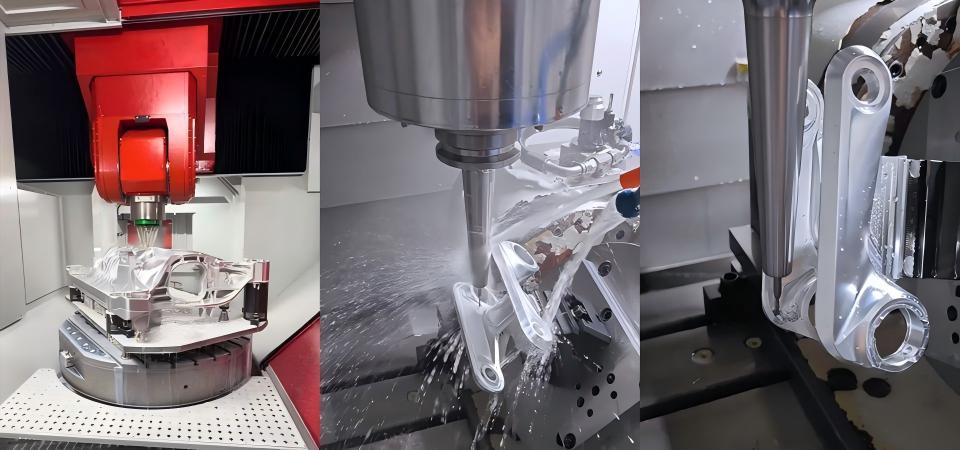
- Fully Continuous 5-Axis: The machine simultaneously moves the cutting tool linearly in X, Y, 在连续旋转两个旋转轴时的Z坐标. 这种能力在制作复杂的曲面三维表面方面无可匹敌——例如涡轮叶片或航空航天叶轮——使我们能够加工通常需要专用成型工艺的零件.
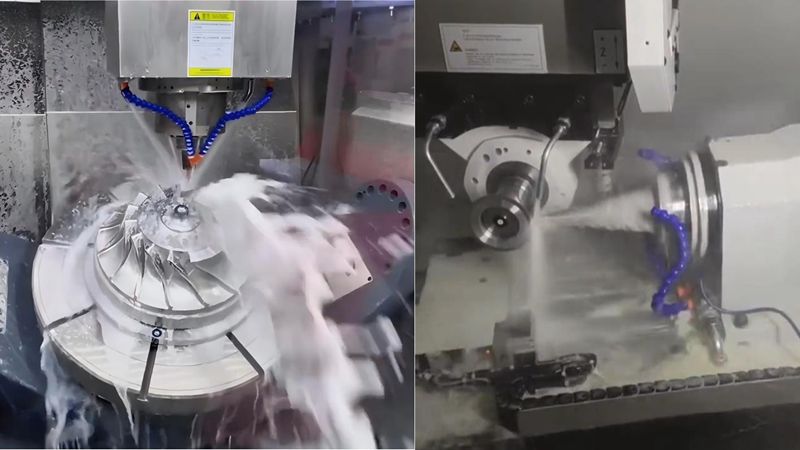
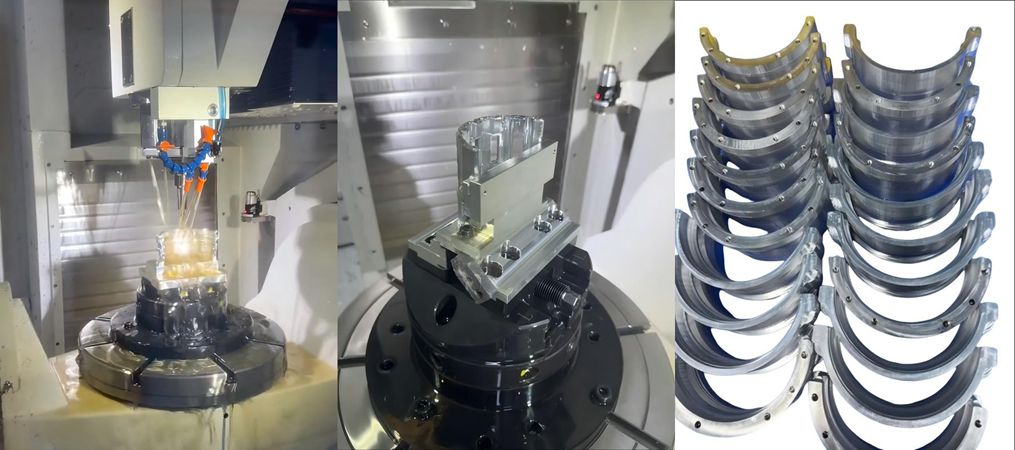
动态加工演示
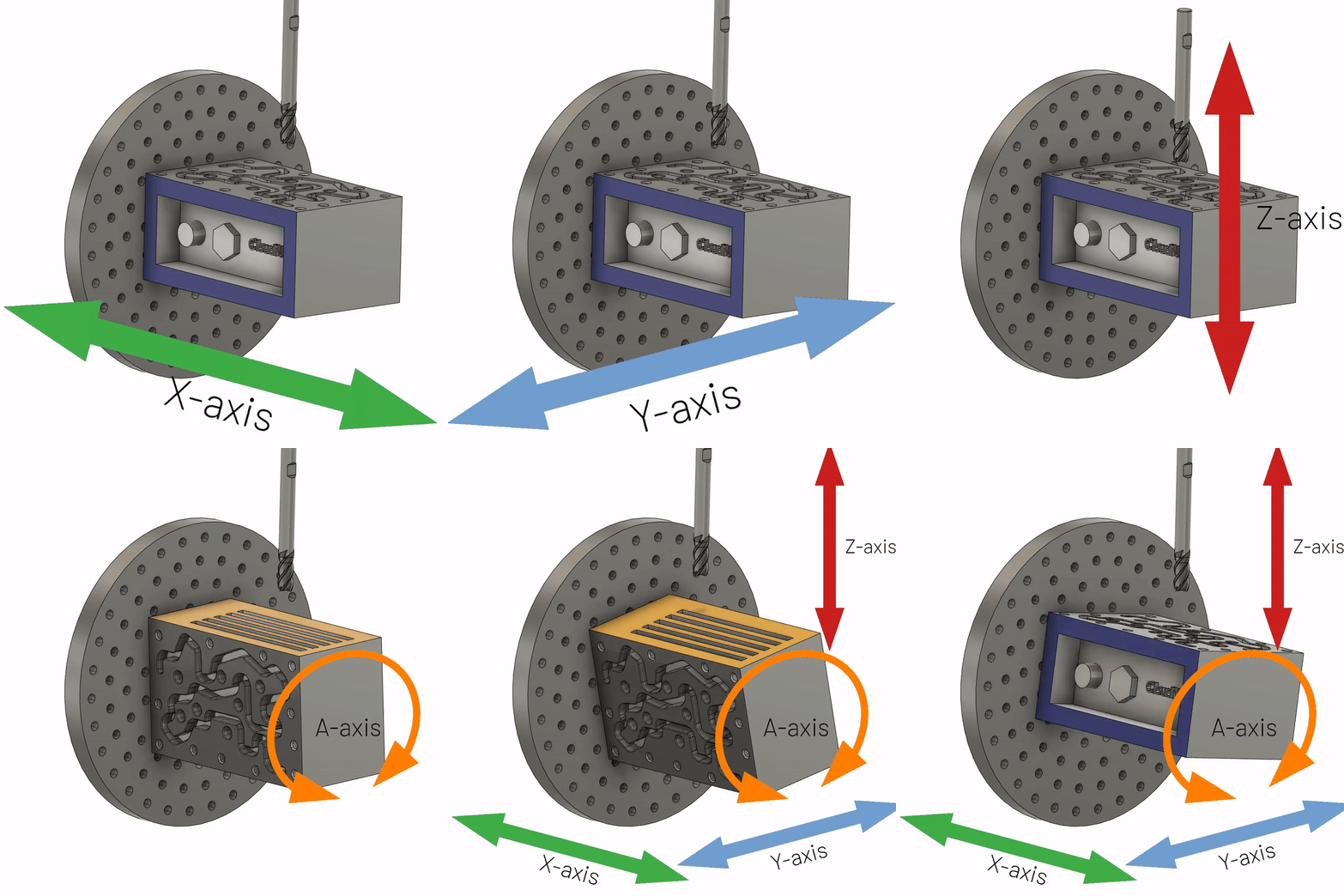
Index 4-Axis
切削前旋转到某个角度
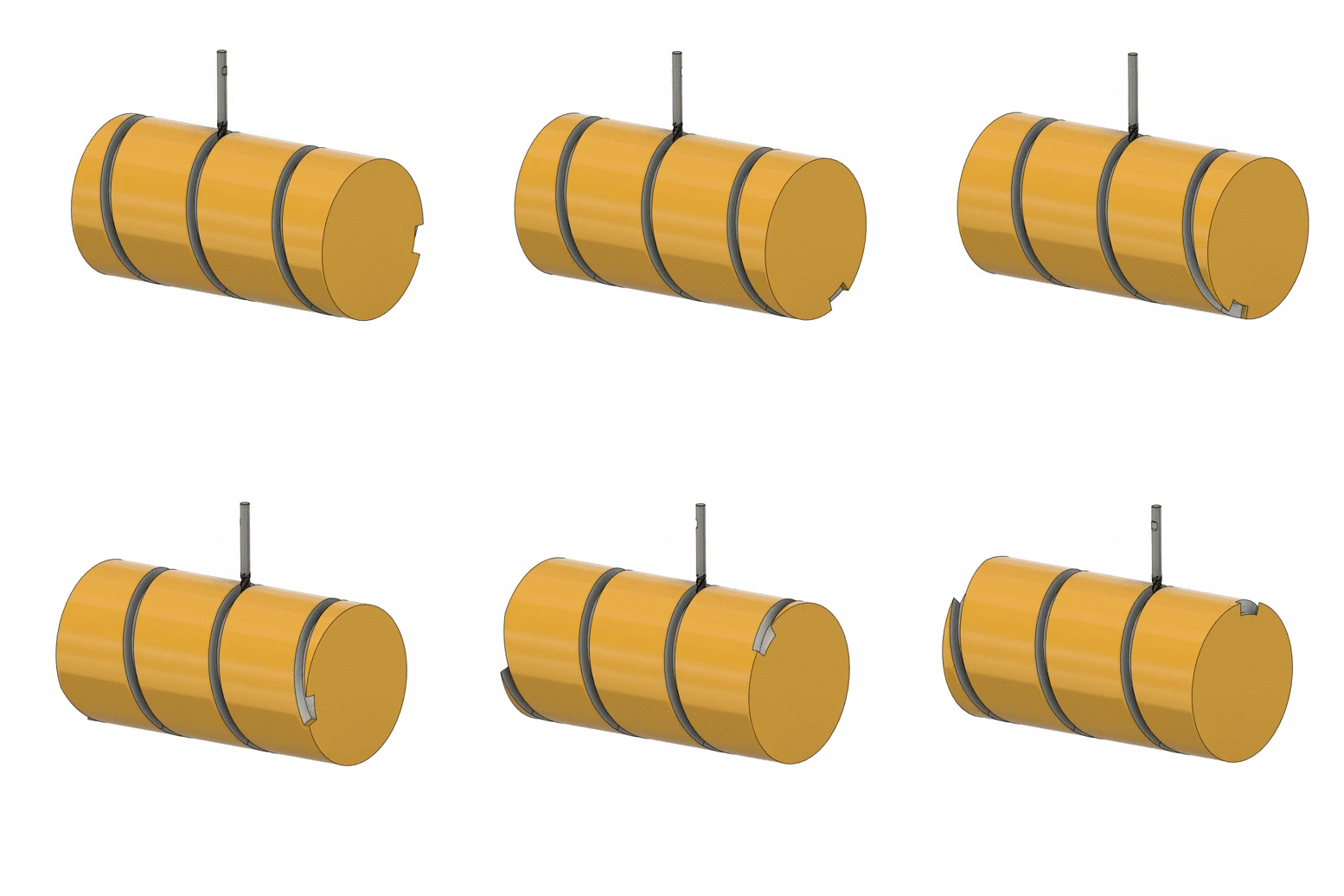
Continuous 4-Axis
同步旋转和切削
Fully Continuous 5-Axis
在复杂三维表面上的无与伦比的能力
准备优化您的下一个复杂设计?
发送您的CAD, STEP, 或PDF文件. GPT Precision的工程团队将审核您的几何体,并利用我们先进的多轴能力提供具有竞争力的报价.
快速交付 • 严格公差 • 高级数控加工
也许你也喜欢
» 各种制造用铝合金
 三轴终极指南, 4-轴, 五轴数控加工
 数控加工中的常见问题及解决方案
 数控铣削与数控车削——区别
 各种制造用铝合金
 数控原型成本驱动因素
服务