Empresa China de Herramientas de Precisión
Traducción



- Llámanos al
+86 755 2308 9686 - Envíenos un correo electrónico
sales@precisiontoolingchina.com - Whatsapp
+86 13530516428
» Estudios de Caso » La guía definitiva para los 3 ejes, 4-Eje, y de 5 Ejes
La Guía Definitiva de Maquinado CNC de 3 Ejes, 4-Eje, y de 5 Ejes
diciembre 23, 2016
La Guía Definitiva de Maquinado CNC de 3 Ejes, 4-Eje, y de 5 Ejes
En GPT Precision, nuestra instalación de última generación está equipada con una gama completa de centros de fresado CNC avanzados de 3 ejes, 4-eje, y de 5 ejes. Para los ingenieros de diseño, comprender las capacidades específicas de estas máquinas es fundamental para optimizar el diseño de las piezas, controlar los costos, y asegurar la fabricabilidad.
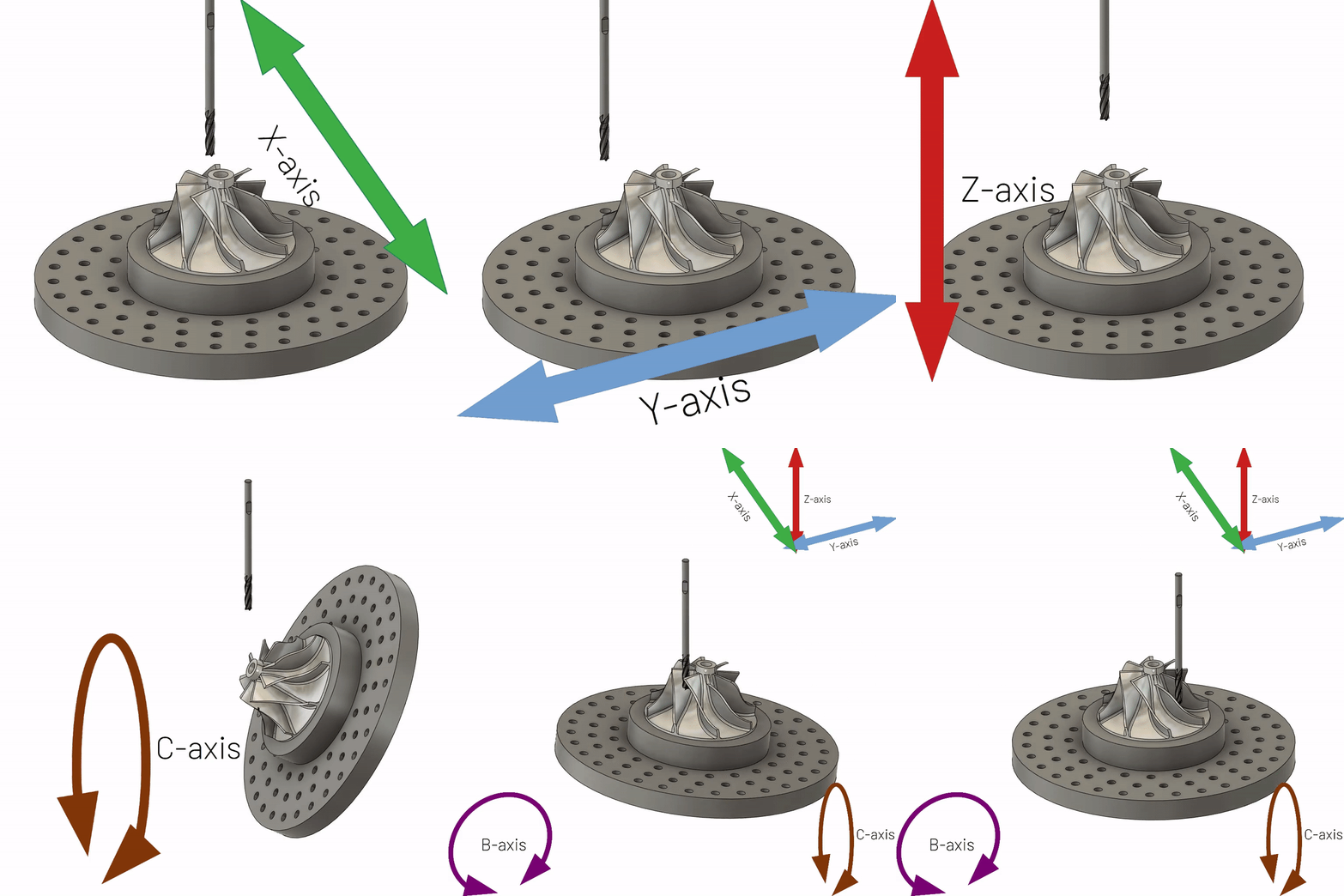
La referencia a "ejes" describe los movimientos multidireccionales que una máquina CNC puede realizar para extraer material de una pieza. Una máquina CNC estándar opera a lo largo de tres planos lineales principales:
Sistemas de coordenadas y trayectorias de movimiento
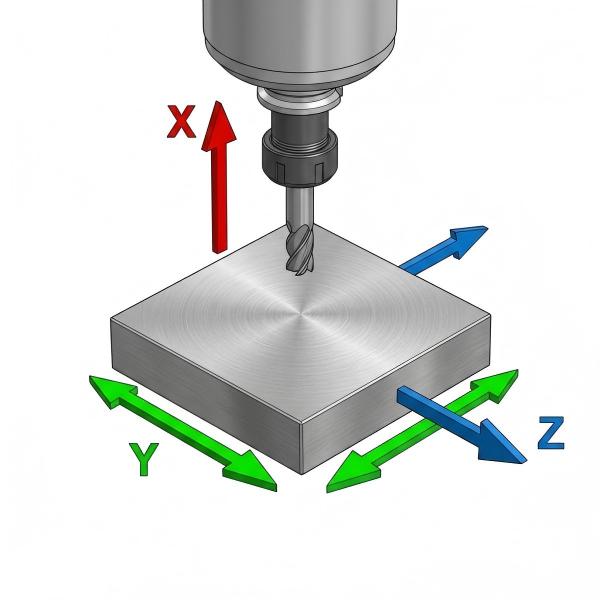
3-Configuración de ejes
Movimiento lineal exclusivamente a través
X, Y, y Z ejes.
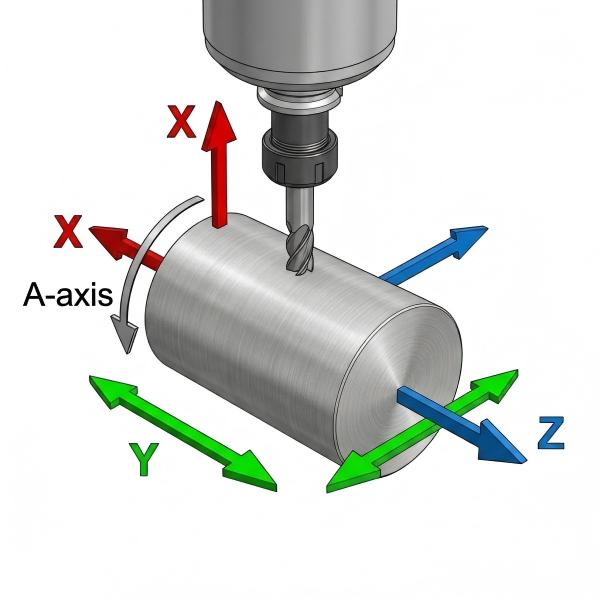
4-Configuración de ejes
Añade rotación (Eje A)
alrededor del eje X.
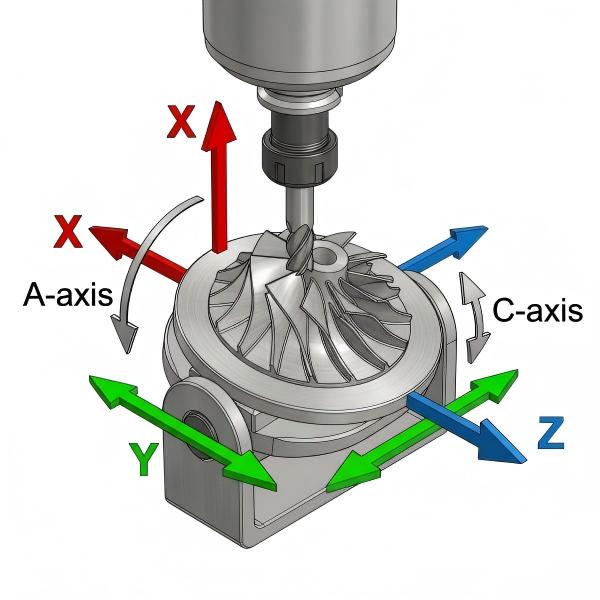
5-Configuración de ejes
Agrega dos ejes de rotación
(por ejemplo, A y C).
3-Mecanizado CNC de ejes: La base
En el mecanizado de 3 ejes, la pieza permanece estacionaria en un solo dispositivo mientras la herramienta de corte se mueve a lo largo de los ejes X, Y, y Z. Este proceso es muy eficiente para la fabricación de geometrías 2D y 2.5D donde las características no requieren profundidad de múltiples ángulos.
Más adecuado para:
- Operaciones de fresado automáticas e interactivas
- Fresado de ranuras estándar y perfiles planos
- Taladro y roscado de agujeros alineados con un eje
- Corte de bordes afilados y componentes mecánicos básicos
Aunque es posible mecanizar los seis lados de una pieza, requiere reposicionamiento manual y múltiples configuraciones. Las características de subcorte pueden lograrse ocasionalmente usando herramientas especializadas como cortadores de ranura en T o cola de milano, pero los diseños altamente complejos suelen ser más viables económicamente en 4 o en centros de 5 ejes.
4-Mecanizado CNC de ejes: Añadiendo flexibilidad rotacional
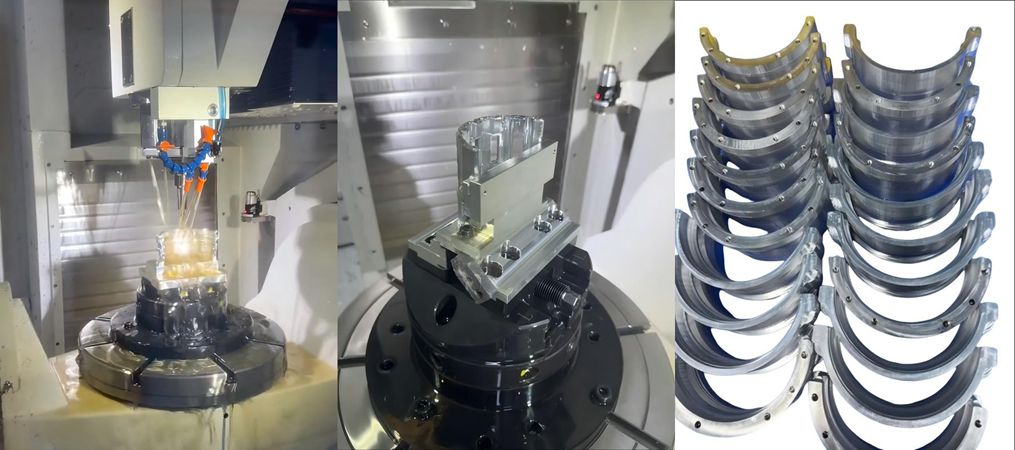
Para superar las limitaciones de los montajes estacionarios, 4-el mecanizado por eje introduce rotación. El husillo sigue moviéndose a lo largo de la X, Y, y Z, pero la pieza está montada en un eje rotatorio (el eje A), permitiéndole girar. Esto significa que cuatro lados de una pieza pueden mecanizarse en un solo montaje de accesorios, acelerar drásticamente la producción y reducir errores acumulados de posicionamiento.
Existen dos métodos principales de mecanizado en 4 ejes:
- Índice 4-Ejes: El eje A rota la pieza a un ángulo específico, un freno la bloquea en su lugar, y la máquina realiza el corte. No corta mientras gira.
- 4 ejes continuos: La herramienta de corte elimina material simultáneamente mientras el eje A gira. Esto es esencial para mecanizar arcos complejos, lóbulos de leva, y perfiles helicoidales.
Consejo de diseño:
4-el mecanizado de ejes permite características anguladas, pero dado que solo hay un eje de rotación por configuración, todas las características anguladas deben relacionarse con ese mismo eje a menos que se utilicen fijaciones adicionales.
5-Mecanizado CNC de ejes: Dominando geometrías complejas
5-las máquinas de ejes utilizan dos ejes de rotación junto con los tres ejes lineales estándar. Dependiendo de la arquitectura de la máquina, esto podría ser una combinación de ejes A y C, o ejes B y C, accionados ya sea por la inclinación del cabezal del husillo o la rotación de la mesa trunnion.
Hay dos configuraciones principales:
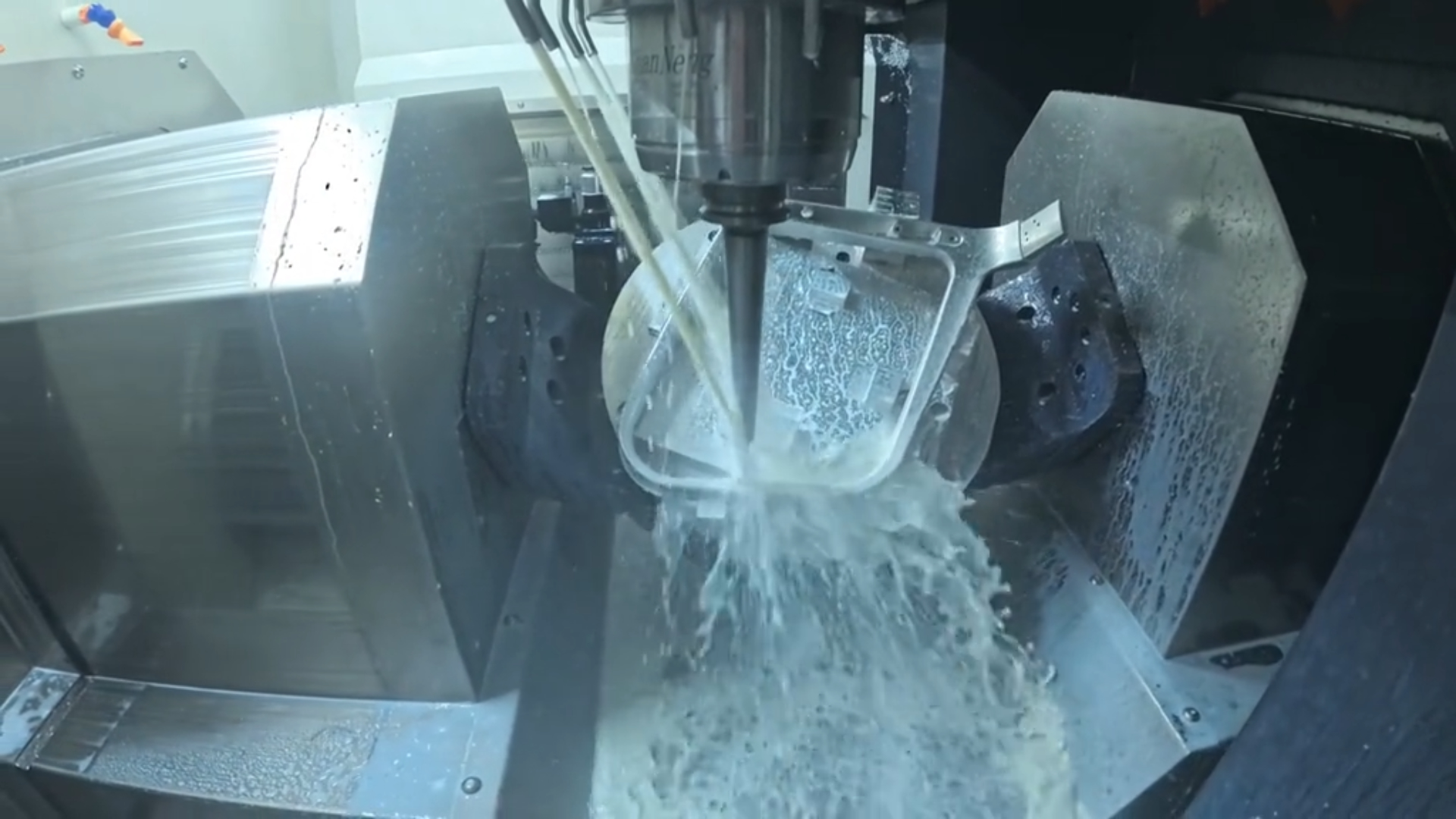
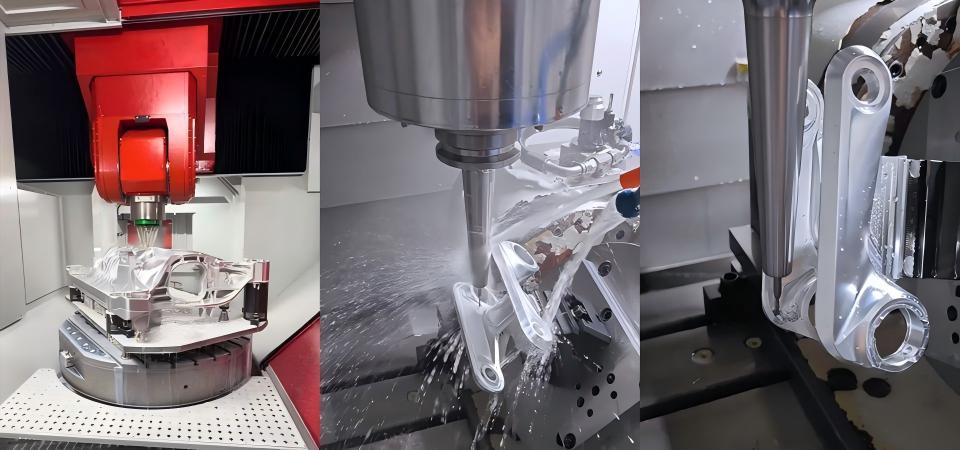
- 3+2 Mecanizado por ejes (Posicional de 5 Ejes): Los dos ejes de rotación orientan la pieza de trabajo a cualquier ángulo compuesto, la bloquean en su lugar, y la trayectoria de herramientas de 3 ejes estándar ejecuta el corte. Aunque no rota durante el corte, aborda de manera eficiente formas 3D altamente complejas desde casi cualquier ángulo.
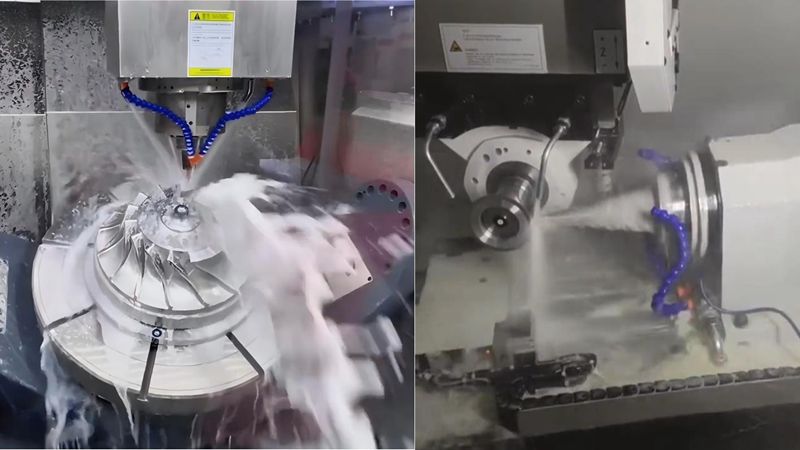
- 5 Ejes Completamente Continuos: La máquina mueve simultáneamente la herramienta de corte de manera lineal en las coordenadas X, Y, Z mientras rota continuamente los dos ejes de rotación. Esta capacidad no tiene igual para producir superficies 3D curvas complejas, como las palas de turbina o los impulsores aeroespaciales, dándonos la capacidad de mecanizar piezas que normalmente están reservadas para procesos de moldeo especializados.
Demostraciones de mecanizado dinámico
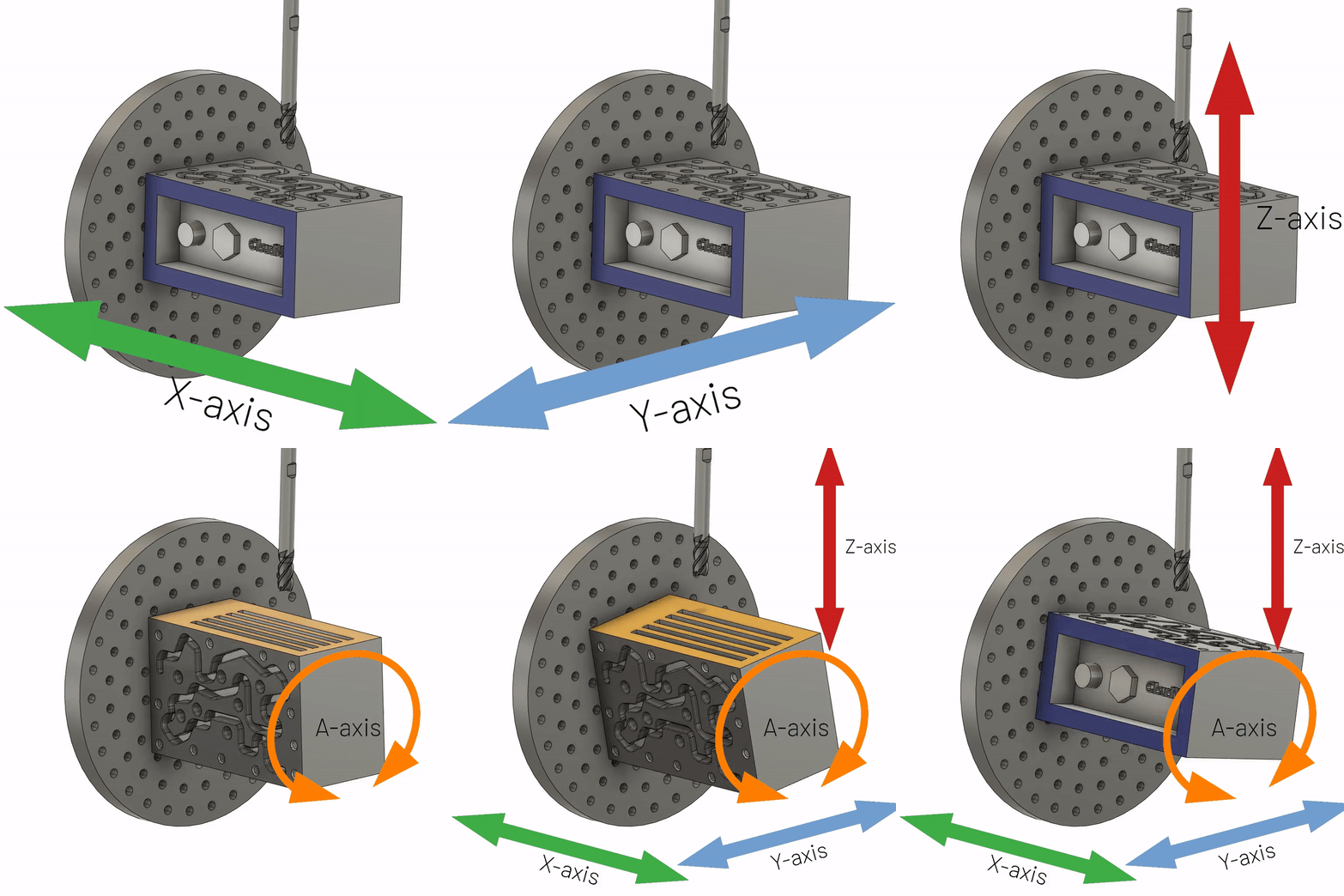
Índice 4-Ejes
Rotando a un ángulo antes de cortar
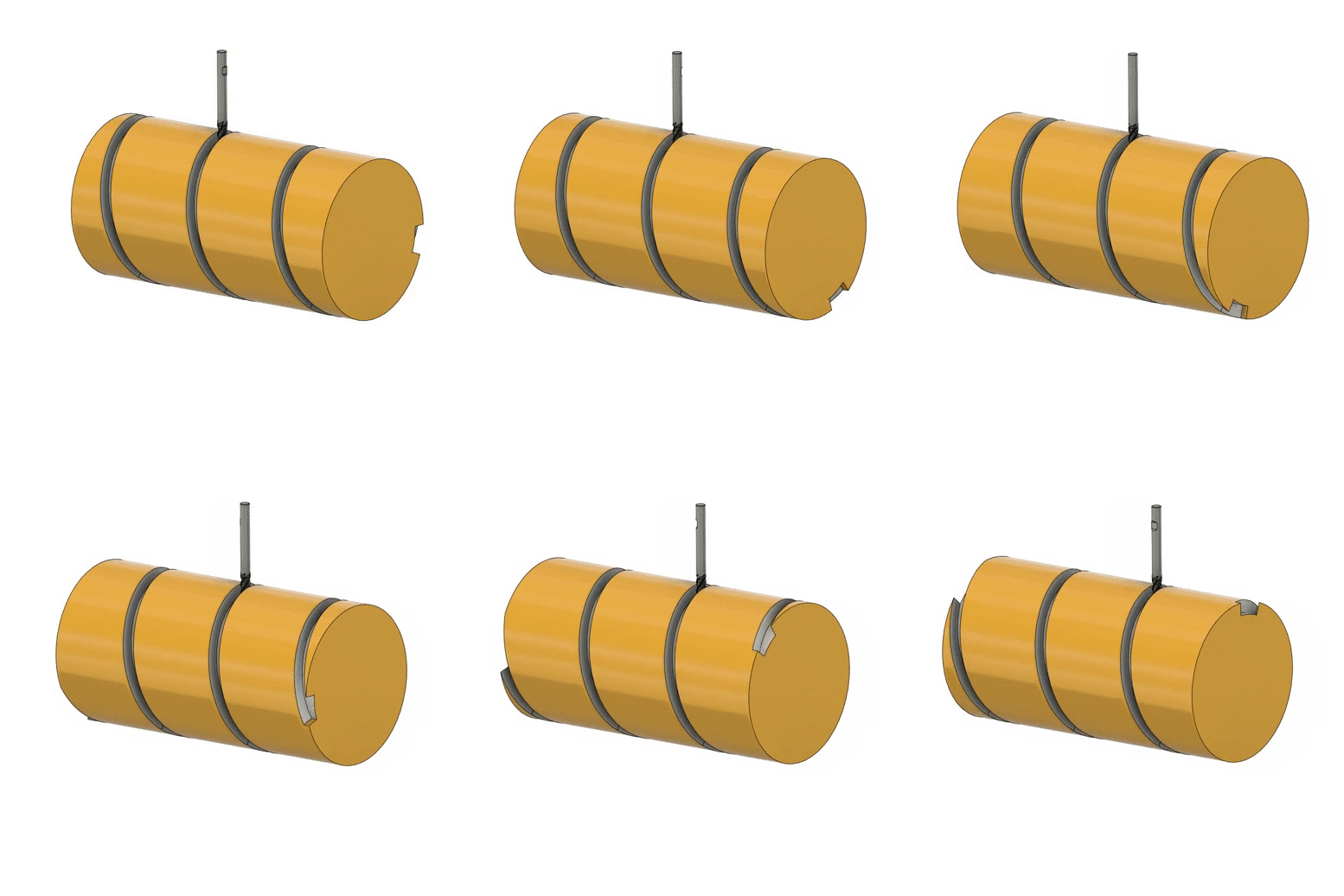
4 ejes continuos
Rotación y corte simultáneos
5 Ejes Completamente Continuos
Capacidad inigualable para superficies 3D complejas
Listo para optimizar su próximo diseño complejo?
Envíenos sus archivos CAD, STEP, o PDF. Nuestro equipo de ingeniería en GPT Precision revisará tu geometría y te proporcionará un presupuesto competitivo aprovechando nuestras avanzadas capacidades multieje.
Subir planos y obtener un presupuesto
Respuesta rápida • Tolerancias estrictas • Mecanizado CNC avanzado
Quizás también le guste
 La Guía Definitiva de Maquinado CNC de 3 Ejes, 4-Eje, y de 5 Ejes
 Problemas comunes y soluciones en mecanizado CNC
 Fresado CNC vs torneado CNC - Las diferencias
 Diversas aleaciones de aluminio para fabricación
 Factores de coste del prototipado CNC
Servicio